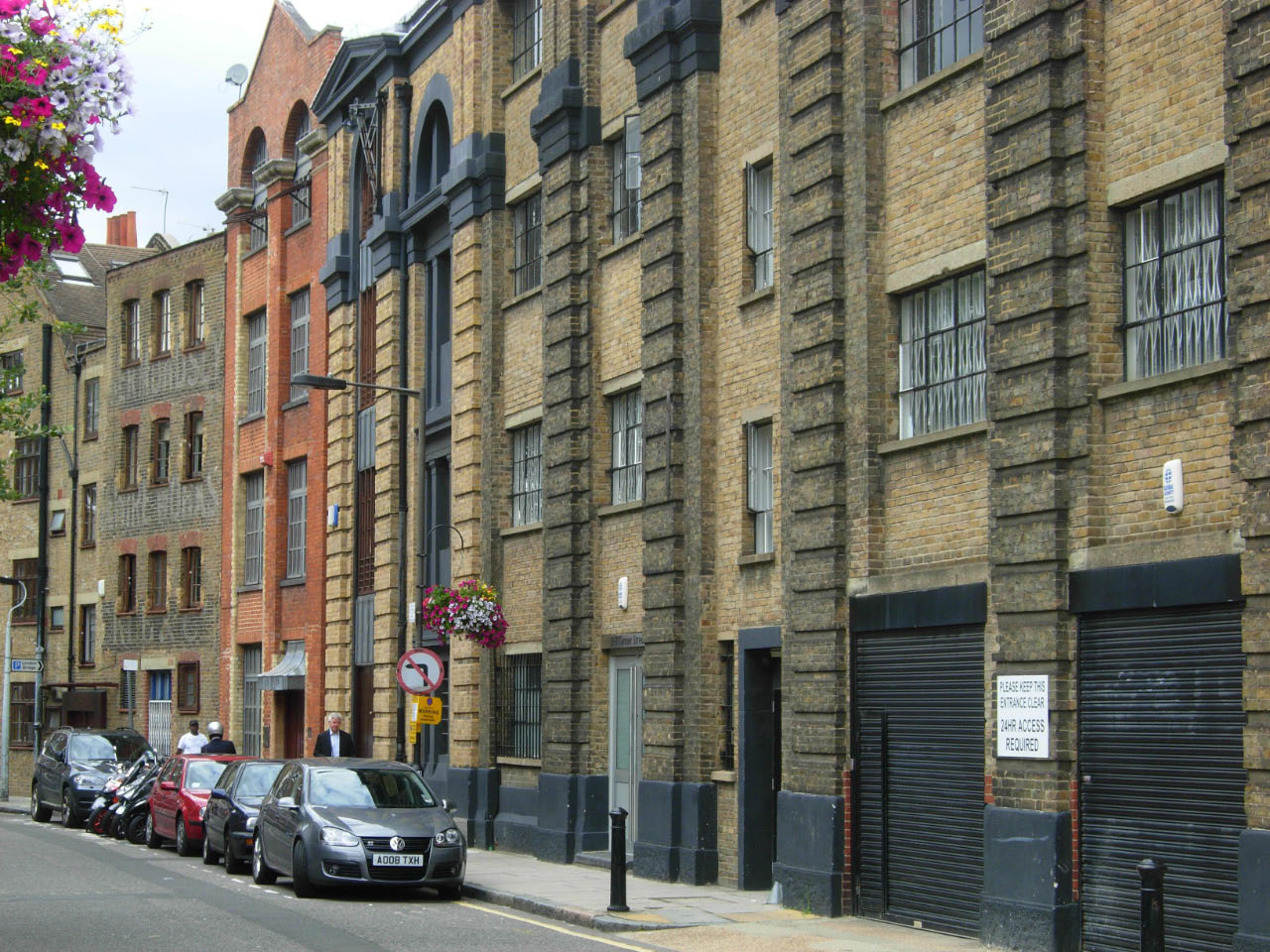
Bermondsey’s leather industry developed in the medieval period, drawn by the proximity of the Thames and the streams feeding it. Tanning was a noxious trade—the smell was overwhelming and the process involved soaking hides in urine, dung, and acidic plant extracts. For this reason, tanners were pushed to the edges of medieval cities, away from the market and the cathedral. In Bermondsey, they found space, water, and isolation. By the 14th century, the district had become London’s leather heartland. The industry thrived through the Tudor and Stuart periods, consolidated further during the 18th and 19th centuries, and remained London’s primary leather-working zone until the 20th century.
14th c.
Tanning flourishes
Bermondsey becomes established as London’s leather district; tanners settle and build workshops near water sources.
1649
Bermondsey Abbey dissolved
The medieval Benedictine abbey’s former lands become available for industrial use, further enabling tannery expansion.
1926
Tanner Street Park created
The former workhouse site on Tanner Street is converted into a public park and green space for the neighbourhood.
1970s onwards
Industrial decline and regeneration
The leather trade shrinks; warehouses converted to apartments and mixed-use spaces as Southwark undergoes urban renewal.
Did You Know?
Tanner Street Park contains a Grade II listed drinking fountain—a relic of early 20th-century public health efforts. The park was established on what had been a workhouse, reflecting the Victorian push to replace punitive poor relief facilities with open spaces for children and families.
The tanning trade began its terminal decline in the mid-20th century as leather processing shifted overseas and environmental regulations made urban tanning untenable. By the 1970s, the great tanneries had closed. Many of their vast warehouse buildings—four- and five-storey red-brick structures built in the Victorian era to process hides and store leather—survived intact. From the 1990s onwards, Southwark underwent comprehensive regeneration. These warehouses were listed, protected, and converted into apartments, offices, galleries, and cafés. The Bermondsey Street area, once dominated by tanning vats, became a destination for art galleries and restaurants. Yet in the street name, and in the architecture of the surviving industrial buildings, the memory of the trade persists.