Explore London England Scotland Wales About API
Southwark · SE1

Avonmouth Street

Named after a Bristol port town, this Elephant and Castle street rose from 19th-century marshland to become a neighbourhood shaped by migration and redevelopment.

Name Meaning
Bristol Port Town
First Named
19th Century
Borough
Southwark
Character
Residential/Student
Last Updated
Time Walk

From Marshland to Student Quarter

Avonmouth Street today is a modern residential street in the Elephant and Castle area, recently transformed by a striking 16-storey student housing tower. The street sits within a neighbourhood that has undergone remarkable transformation over two centuries—from boggy marshland into a vibrant inner-city district serving nearby universities including London South Bank University and the London College of Communication.

2018
Avonmouth St
Avonmouth St
Wikimedia Commons · CC BY-SA 2.0
Historical image not found
Today
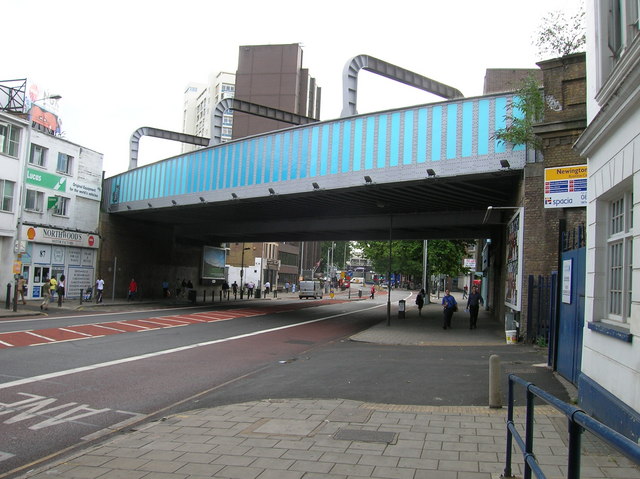
Railway bridge, Newington Causeway SE1 — near Avonmouth Street
Geograph · CC BY-SA 2.0

What seems like an ordinary south London street conceals a geological history of tidal mudflats, and a naming tradition that stretches back to the Victorian age, when London developers borrowed names from established English ports and towns to lend character to newly built streets.

✦   ✦   ✦
Name Origin

A Port Town Three Centuries Old

Avonmouth Street takes its name from a port town on the Severn Estuary, at the mouth of the River Avon in Bristol. The name itself is ancient: British History Online records show that the location was known in Old English as "Afenemuþan," combining "Avon"—from the Common Brittonic word for river—with "mouth," meaning the estuary or meeting-point of waters. The Bristol port, properly developed from the 1860s onwards as a major docking facility, was an established name by the time London's suburban expansion reached this marshy corner of St George's Fields in the 19th century.

Prior records refer to this section as Devonshire Street, but as documented in British History Online's Survey of London, the street was renamed Avonmouth Street as part of the wider wave of Victorian street-naming that followed the enclosure and development of St George's Fields. The name never refers to a person or a local landowner—it is purely topographical, borrowed wholesale from the already-famous port.

How the name evolved
pre-1850 Devonshire Street
c.1880s–present Avonmouth Street
✦   ✦   ✦
History

Where Mud Met Progress

The ground beneath Avonmouth Street was inhospitable for most of recorded history. British History Online documents extensive deposits of peat and mud at this location—up to 18 feet of mud layered above the sand and gravel subsoil. This treacherous terrain formed part of the larger marshland known as "Stewfen," which persisted until the beginning of the 19th century, making the area unsuitable for building. The Romans likely avoided it; medieval Southwark developed along higher ground closer to the Thames.

Key Dates
c.1750–1800s
Fields Enclosed
St George's Fields, containing this area, were enclosed and laid out in streets as London expanded southward.
1863–1865
Port Railway
Bristol's Port Railway and Pier opened, with its terminus station christened Avonmouth—establishing the name as a known English port town.
1880s
Street Renamed
Devonshire Street was renamed Avonmouth Street, reflecting the Victorian practice of borrowing established place-names for new thoroughfares.
2022–2023
Modern Redevelopment
Avonmouth House student accommodation completed, marking the street's latest phase of urban transformation.
Did You Know?

The Thames-side marshes that dominated this area for centuries left telltale geological evidence. When roads were built and drains laid in the 19th century, builders encountered the ancient waterlogged deposits—a reminder that the ground beneath this street was underwater or muddy bog for thousands of years before urban development.

As St George's Fields were opened up and streets were laid out, Avonmouth Street emerged as a modest residential street. The area attracted working-class housing and light industry. In the 20th century, like much of inner-city London, the street faced bomb damage and urban decay, followed by piecemeal redevelopment. Today's skyline—dominated by the new 16-storey student accommodation tower—represents the latest chapter, placing the street at the heart of London's rapidly expanding university housing market.

Street Origin Products

Your listing has a better story than it’s telling

Avonmouth Street sits at a geographic crossroads where Victorian expansion transformed London's marshland into neighbourhood. Here’s how to put it to work.

Professional Edition
Street Pack
“Why this address matters.”

Buyers pay more for addresses with a story. The Street Pack gives estate agents and developers brochure-ready copy, prestige framing and a name origin panel—everything needed to make this address feel significant before a viewing is booked.

  • Brochure copy — 100 & 200 word versions
  • Prestige framing version
  • Name origin panel
  • Timeline strip
  • Buyer persona framing
For estate agents, developers & property portals
From £19
Get the Street Pack
Street Social Kit
“Why this place feels interesting.”

Airbnb guests choose atmosphere as much as amenities. The Social Kit gives you five ready-to-post tiles, story templates, captions, hooks and a Reel script—all built from this street’s actual history. Done for you, in minutes.

  • 5 ready-to-post social tiles
  • 3 Story templates
  • 5 captions & 3 hooks
  • 1 Reel script
  • Hashtag clusters
For Airbnb hosts, boutique landlords & small agents
From £9
Get the Social Kit
✦   ✦   ✦
Culture & Character

A Street Reborn

Avonmouth Street's cultural character has shifted dramatically in recent years. Once a quiet residential street serving local families, it has become an anchor point for student life in south London. The completion of Avonmouth House in 2023—a striking 16-storey student accommodation block providing 226 rooms—has reshaped the street's identity and landscape.

The street's immediate context places it within walking distance of two major educational institutions. This proximity has accelerated its transformation from a working-class residential backwater into a strategically important site for university housing. The street represents a contemporary pattern across London: the conversion of older residential areas into purpose-built student quarters, reflecting both university expansion and the financialisation of student housing.

✦   ✦   ✦
Today

Student Quarter Rising

Avonmouth Street today is dominated by modern mixed-use development. The new Avonmouth House tower—a contemporary brick structure with generous proportions and commercial spaces at ground level—now defines the street's visual character. The building represents a deliberate investment in inner-city student housing, completed ahead of schedule in 2023.

The street remains part of the wider Elephant and Castle neighbourhood, an area in continuous transformation since the 1960s. While the street itself is relatively quiet and orderly, it sits in a district buzzing with universities, transport links, and cultural venues. The combination of new student accommodation, proximity to South Bank institutions, and ongoing regeneration makes Avonmouth Street a place where London's contemporary urban challenges—housing affordability, student welfare, and neighbourhood identity—converge visibly.

5 min walk
Elephant Park
Landscaped public realm at the Elephant & Castle town centre, with seating and plantings.
8 min walk
Archbishop Park
Victorian park with mature trees, open grassland, and recreational facilities.
10 min walk
Burgess Park
22-acre urban park with lake, nature reserve, and community gardens.
12 min walk
Thames Path
Riverside walking route offering access to the Thames and views of central London.
✦   ✦   ✦
On the Map

Avonmouth Street Then & Now

National Library of Scotland — Ordnance Survey 6-inch, c. 1888. Hosted by MapTiler. Modern: © OpenStreetMap contributors.

✦   ✦   ✦

Frequently Asked Questions

Why is it called Avonmouth Street?
Avonmouth Street is named after Avonmouth, a port town in Bristol located at the mouth of the River Avon where it meets the Severn Estuary. The name combines the Old English "Avon"—derived from the Common Brittonic word for river—with "mouth," meaning estuary. Victorian London developers borrowed names from established English ports and towns when laying out new streets, and Avonmouth was a well-known port by the time this street was developed in the 19th century.
What was this street called before Avonmouth Street?
Historical records refer to this location as Devonshire Street. The name changed to Avonmouth Street during the Victorian period, as part of the wider wave of street naming and renaming that accompanied the enclosure and development of St George's Fields. The shift reflects the 19th-century practice of adopting place-names from across Britain for new metropolitan streets.
What is Avonmouth Street known for?
Today, Avonmouth Street is known as a residential street in the Elephant and Castle area, recently transformed by modern student housing development. The street's defining landmark is Avonmouth House, a 16-storey tower completed in 2023 providing 226 student accommodation rooms. The street sits within walking distance of London South Bank University and the London College of Communication, positioning it at the heart of south London's rapidly expanding student housing sector.